Resident Theologian
About the Blog
Piranesi and Decreation
Last month I read Piranesi, Susanna Clarke’s belated follow-up to her best-selling Jonathan Strange and Mr. Norrell. Piranesi is as wonderful as advertised, a bona fide mystery box of pure prose, genuine wonder, and spiritual imagination. It’s also best to go in without knowing anything, so unspoiled readers who prefer to remain that way ought to stop here.
An alternative Episode IX crawl
Yesterday I wrote about Episode VIII. Unfortunately, we never saw the promise of that great film fulfilled in a sequel that continued its themes and narrative arc. Instead, we got Episode IX, which was dead on arrival.
When I wrote about IX two years ago—a lot of words, by the way—I mentioned an idea for an alternative crawl that would have opened a much different, far better capstone to the Star Wars trilogy of trilogies.
Interpreting The Last Jedi
I’m on record, and have been from the beginning, as a lover of Rian Johnson’s The Last Jedi. When I was on Twitter, I enjoyed having friendly—key word, that—debates with others about it. In fact, just last month I introduced myself to a senior academic at another institution, a person I’ve read but have never met before, and as he shook my hand he said, “Oh, I know who you are. You’re the one who thinks The Last Jedi is a good movie.”
The queen
Of all the brilliant British women writers who lived to a good old age in the long twentieth century, who is your favorite? The candidates are many; both Mary Midgley and Agatha Christie come immediately to mind. Doubtless Rebecca West is chief among all women and men of English letters during this period. But as for me and my house, we hail P. D. James, or as I affectionately call her, The Queen. Long may she reign, even in death.
A philosophical introduction
At the close of Jonathan Lear’s introduction to the second edition of his book Freud, he explains what he is and is not aiming to do in the book. Lear is always as sober, clear, and direct as he is here, but it is the confident lucidity of his stated approach to interpreting Freud’s ideas from a particular angle, with particular interests—ignoring any and all matters that would distract from those interests—that is noteworthy here. It should be a model for similar approaches in historical and systematic theology, not least when dealing with events, ideas, and persons as controversial as Freud (both the man and his legacy).
A+ DBH
David Bentley Hart has a new essay in the latest issue of Commonweal, and it’s a corker. It’s Hart in full form, but in his sober (rather than his exuberant or polemical) mode: considerate, charitable, open-handed, wide-angled, just, critical, and constructive. Just what the doctor ordered, in other words.
God help me, an MCU viewing order
Regarding the Superhero Industrial Complex I have always felt ambivalent.
On the one hand, I couldn’t agree more with the long exhausted sigh that is the sum total of film critics’ response to the comic book takeover of Hollywood. I wish it were not the case; I wish we still had a diverse array of mid-tier, mid-budget, middlebrow movies made with style and competence for adult consumption; I wish Hollywood did not let the profit motive, and the current fad of capes and tights, determine so much of its offerings—at the very moment that the theater experience is at risk and quality writers (and directors!) are moving to TV.
Coming attractions
I have a number of exciting projects that are all about to be published, mostly between now and the end of the year, plus one more thing next spring. I’ve been sitting on most of them, but now I’m in a position to make all of them public. What follows isn’t everything I’m doing in the next few months, but it’s certainly what will be taking up space (rent-free, as they say) in my brain.
Sound familiar?
Although he was often called a fascist and compared to Hitler, the parallel applied only to his methods. Not only was the historical situation hopeless for a radical change like fascism, the country being unprecedentedly prosperous, but McCarthy never showed any interest in reshaping society. Half confidence man, half ward politician, he was simply out for his own power and profit, and he took advantage of the nervousness about communism to gain these modest perquisites.
Art tonnage
This weekend I watched Steven Soderbergh’s latest film No Sudden Move (available on HBO Max). It’s a modest period heist film, of a piece with Soderbergh’s proclivity to leaven his Major Releases with minor genre exercises. I always enjoy those exercises, and I enjoyed this one, too. It’s restrained, formally inventive, clever, and draws lovely performances out of actors old and new. I especially appreciated seeing Don Cheadle in fine form.
An action movie pet peeve
I don’t recall when it first appeared on screen, much less when it became a tired trope, but in the last 5-10 years a certain scene has become a mainstay in action movies (and TV shows). The protagonist realizes he needs the help of A Certain Someone. But either the last time he saw A Certain Someone things didn’t end well, or A Certain Someone is an unsavory character who can’t be trusted.
From meaningless content to doomscrolling
One of the truly essential Substack writers is Justin E. H. Smith, who is neither a journalist nor a start-up freelancer but a major academic philosopher and polymath scholar of (what always strikes me as) ten thousand interesting things. His newsletter from two Sundays ago was a typically undefinable reflection on (inter alia) memory, streaming, tense, eternity, and the internet.
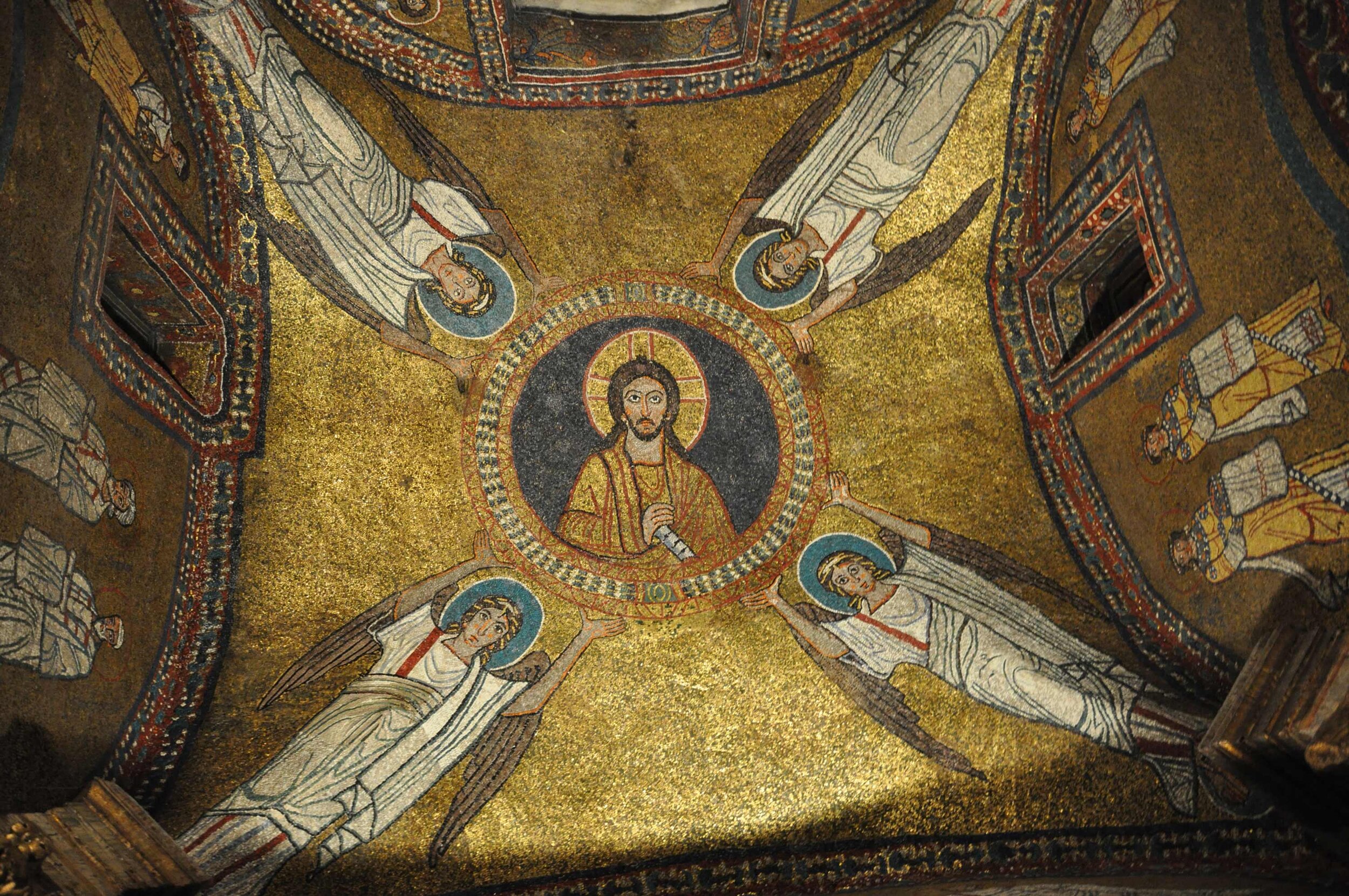
Mary’s gaze
Don’t look up, Christ’s concave golden gaze
unbearable, wholly
beyond, beyond
holy: taste
the gold scent and kiss
The Book of Strange New Things, 3
So I don’t think Michel Faber’s The Book of Strange New Things works. Its lead is unbelievable; the prose is unmemorable to a fault; the payoffs meant to explain the eerie human and mental atmosphere on the alien planet are unsatisfactory, and call in turn for further explanations that are never forthcoming.
What works, if anything? A few things.
Kubrick + Spielberg = ?
I had my cinephile card revoked on or around the birth of my first child (there’s only so much time in the day, you know?), but for the first dozen years or so of this century, I was something of a budding film fanatic. I watched American films, foreign films, old films, new films, art films, popular films. I had lists upon lists of directors whose whole oeuvres I devoured one by one.
The Book of Strange New Things, 2
In my last post I wrote about how Peter, the protagonist of Michel Faber’s The Book of Strange New Things, is unbelievable. I want now to say a bit more about why the novel doesn’t quite work.
The Book of Strange New Things, 1
I just finished Michel Faber’s The Book of Strange New Things, and I’ve got Thoughts. I didn’t hate it, but I didn’t love it either. I think I might expand on a couple reasons in future posts. But the first thing I have to say about the book is this.
The lead character is simply not believable.
Cheering for Monty Williams
While you, like me, are enjoying this year’s NBA playoffs, and while you, like me, are cheering for a Suns–Hawks Finals, remember what kind of man is coaching Phoenix. Just under seven years ago Sports Illustrated wrote an extensive piece about Ryan Anderson, who at the time played for the New Orleans Pelicans. The story was about the circumstances surrounding the suicide of Anderson’s girlfriend, and the personal and emotional fallout afterward.
Brutalizing academe
Timothy Burke, who teaches history as Swarthmore College, is a brilliant mind and thoughtful writer. For years he’s maintained one of the best academia-adjacent blogs on the internet, called Easily Distracted.
MZS on F9
Matt Zoller Seitz was put on this earth to write about film, but most of all about big-budget would-be brain-dead Hollywood blockbusters. The combination of highbrow (his eye, his prose) and lowbrow (in this case, the ninth entry in the Fast & Furious franchise) is always gangbusters.