Resident Theologian
About the Blog
Three types of Christian higher ed
A mini-typology of different approaches to Christian higher education.
My latest: a plea to teach college students about God, in The Raised Hand
A link to my essay answering the question: “What does every university and college student need to learn?”
Four tiers, forty authors
Assigning forty authors to precise spots across the four tiers of Christian publishing.
My latest: the ends of theological education
A link to my essay in Sapientia on the ends of theological education.
So you want to get a PhD in theology
At long last, a primer on pursuing a PhD in theology—whether, how, why, where, and what it looks like. All in a breezy 5,000 words…
Four tiers of Christian/theological publishing
A long reflection on four tiers or levels of Christian/theological writing in terms of style, accessibility, sales, and audience.
Mapping academic theology
Sharing and reflecting on John Shelton’s genealogical web of liberal mainline institutions, theologians, and ethicists in the wake of Barth.
The vanity of theologians
The love of God in Christ is the model of all good theological work. That is Barth's basic thesis: “If the object of theological knowledge is Jesus Christ and, in him, perfect love, then Agape alone can be the dominant and formative prototype and principle of theology.” Yet who among us would claim to consistently meet this standard? It is one thing to agree that teaching ought to be an act of self-emptying love on behalf of students, but quite another to teach that way.
Perennial epigraph
Plaster this as the epigraph or foreword to every work of theology, every essay, every review, every lecture, every class, every tract, every sermon, every degree in doctrine or ministry or biblical studies.
Be the teacher
It’s an old line: When asked about the experience of teaching, a teacher replies that he learned more from the students than they learned from him. One can understand the impulse, and why the answer endures as a kind of proverb or cliché: it’s an expression of humility; it resists the impression of the master dispensing Knowledge from on high; it conjures a classroom in which student and teacher collaborate together in the search for knowledge; it appeals to our democratic sensibilities; it might even tickle our know-nothing instincts, dormant though they may be.
No fads, please
Writing about angels last week, I had in mind not just garden-variety demythologizers but specifically the sort of MDiv-in-hand pastor who reports having “matured” or “evolved” beyond the simple pieties of his upbringing, his denomination, or his own flock. In my experience, nine times out of ten this maturation or evolution, falsely so called, is not the result of actual wide reading in the church’s tradition but rather a function of moving up in the world, as a matter of education, class, or status. That is to say, it’s the product of peer pressure.
Angels
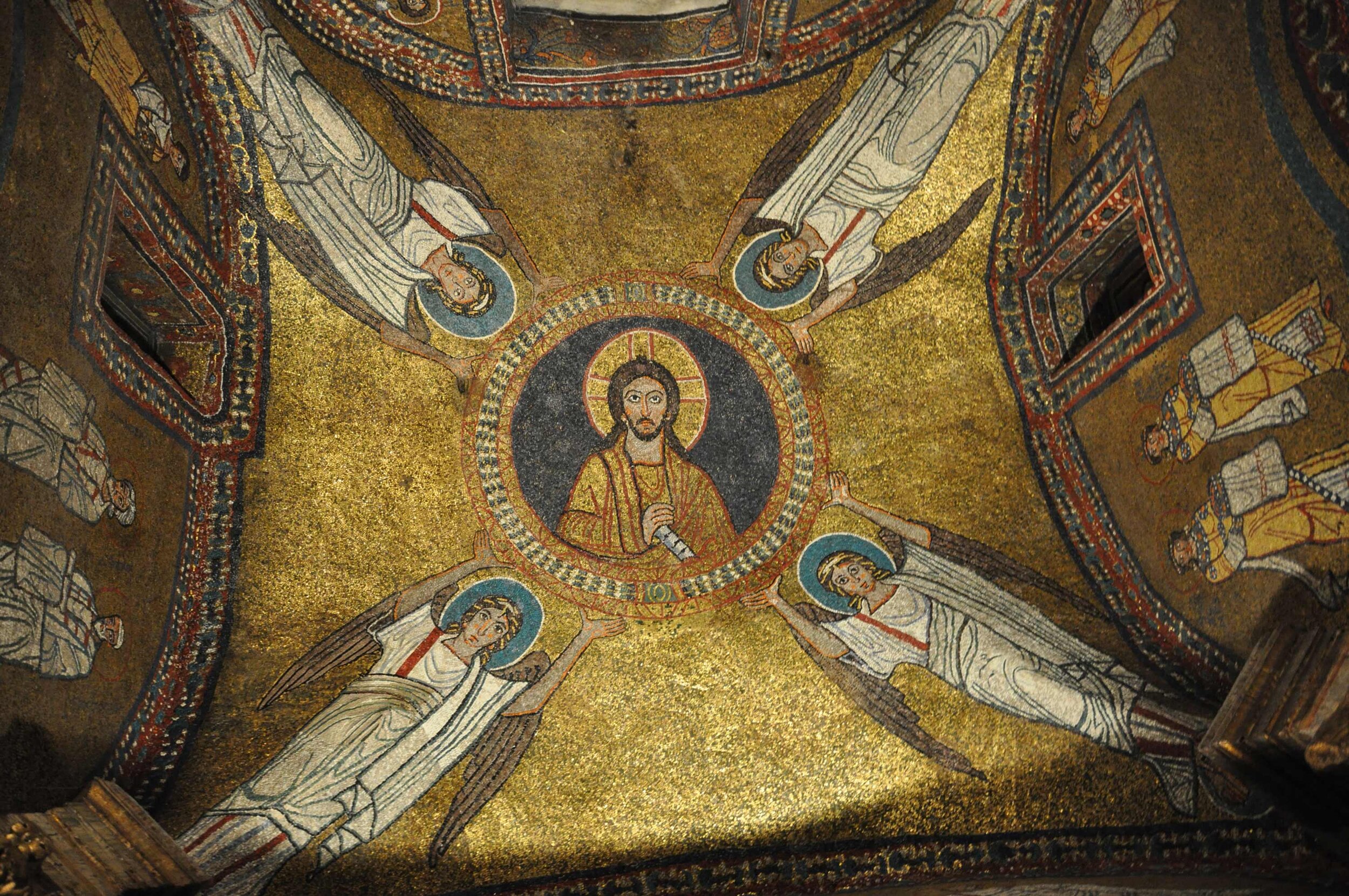
A few years back I had one of those serendipitous reading moments when all at once an unexpected theme or subject emerges from disparate and seemingly unrelated texts. The first was the Space Trilogy by C. S. Lewis; the second, the Catholic Catechism; the third, On the Orthodox Faith by St. John Damascene. The topic? Angels.
Listening to Lewis
One of my goals for 2021 was to listen to fewer podcasts and more audiobooks—a double good, that. One of my strategies was to find novels and nonfiction on the shorter side, to gain some momentum and feel like I was making it through actual books rather than slogging through interminable chapters.
Karen Kilby book forum in Political Theology
At long last, the newest issue of the academic journal Political Theology is out, and it features a book forum I organized and edited for the journal. The forum, or roundtable discussion, is devoted to Karen Kilby’s latest book, a collection of mostly previously published essays titled God, Evil, and the Limits of Theology. Here is how the forum is laid out:
Publication round-up: recent pieces in First Things, Journal of Theological Interpretation, Mere Orthodoxy, and The Liberating Arts
I've been busy the last month, but I wanted to make sure I posted links here to some recent pieces of mine published during the Advent and Christmas seasons.